Custom CNC Golf Putter
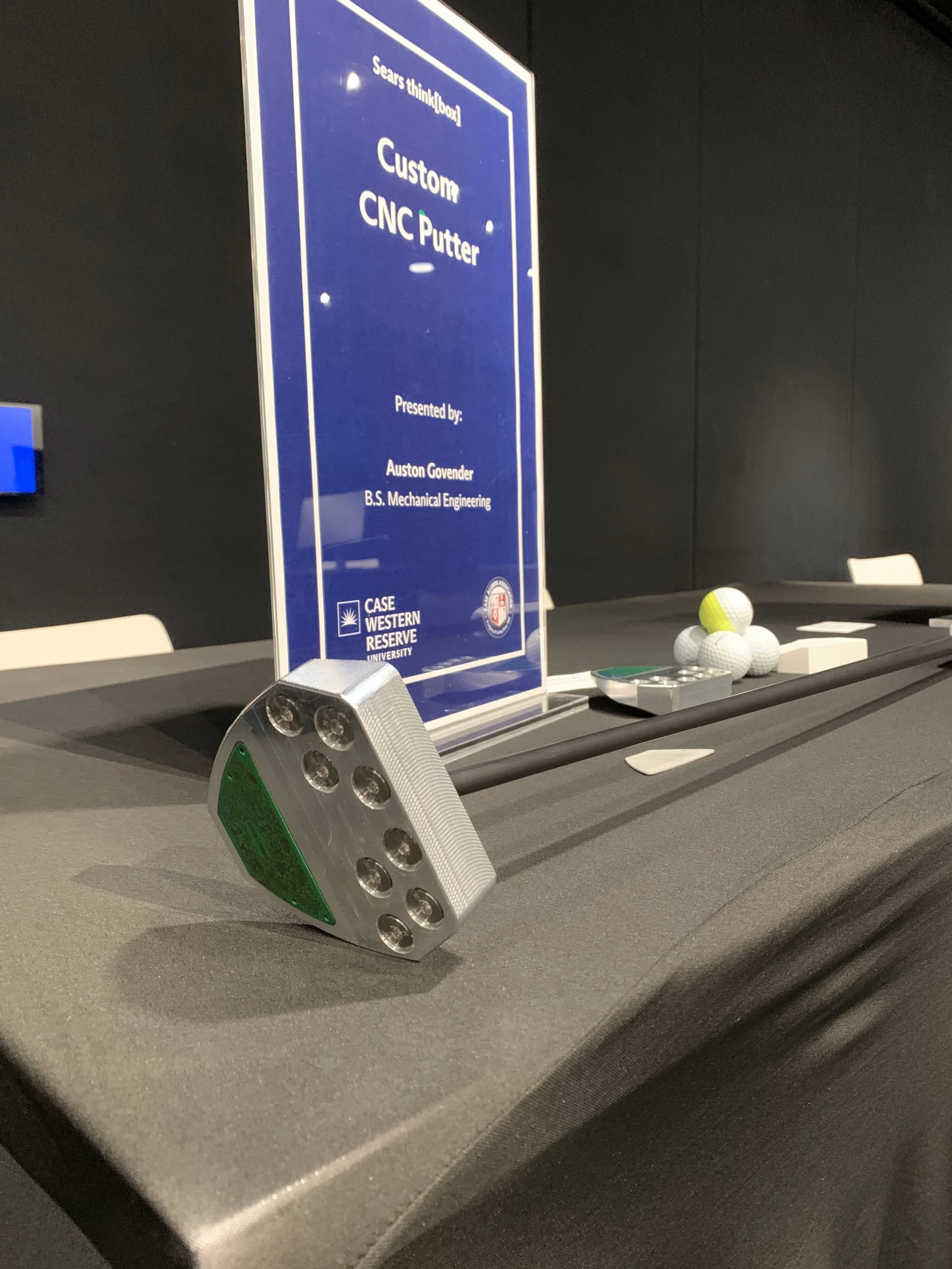
The Custom CNC Golf Putter was a fully self-directed engineering project funded through the Sears Think [box] Student Project Fund. My goal was to design and manufacture a premium center-shafted putter that balanced performance, manufacturability, and aesthetics while challenging myself to learn advanced 4-axis CNC machining techniques.
Unlike many of my previous engineering projects, this design was driven not only by engineering requirements but also by personal expression through manufacturing. I owned every stage of the project, including defining the design requirements, CAD modeling, prototyping, CAM programming, CNC machining, anodizing, and final assembly, while also collaborating with experienced machinists to validate manufacturing decisions and further develop my CNC machining skills.
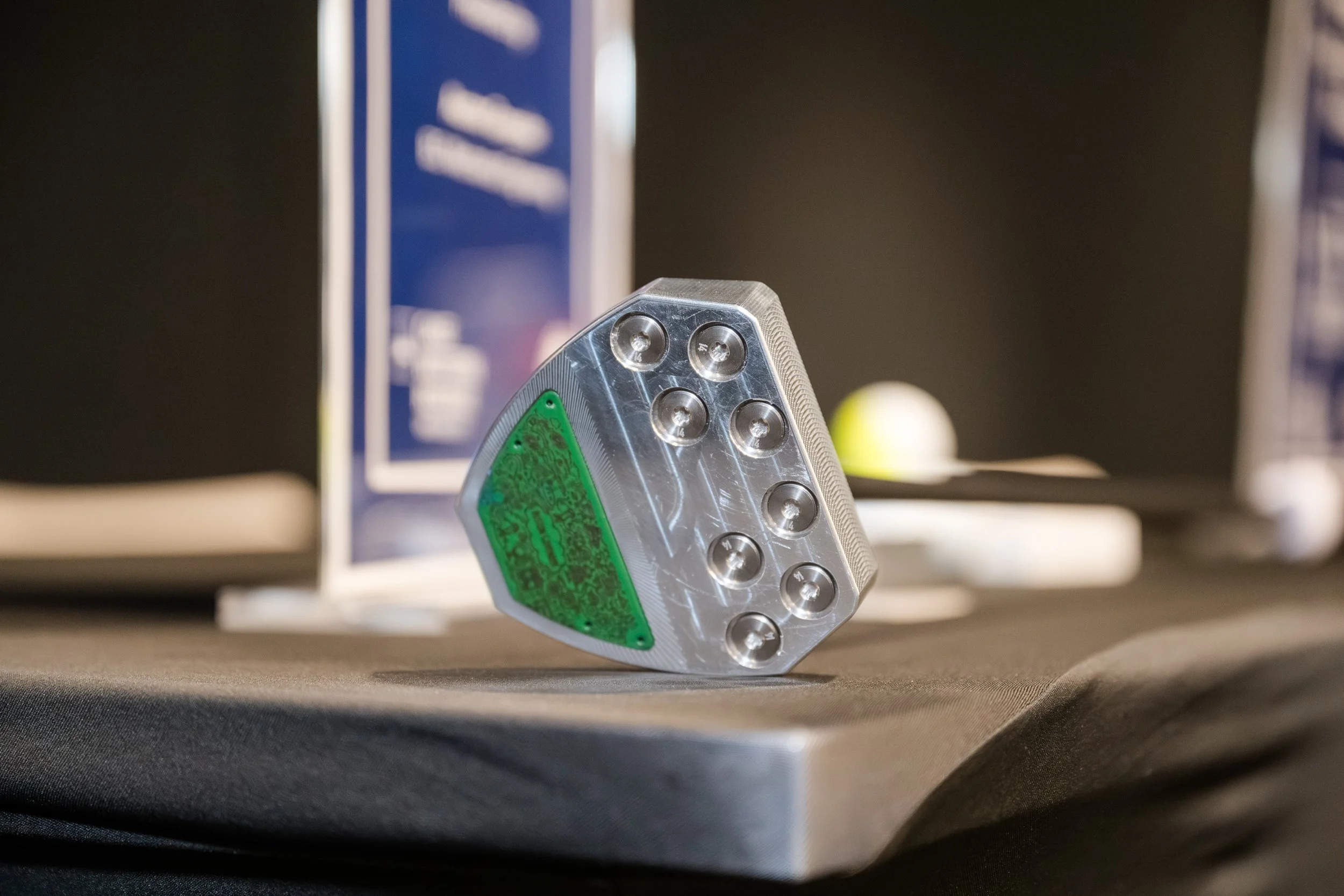
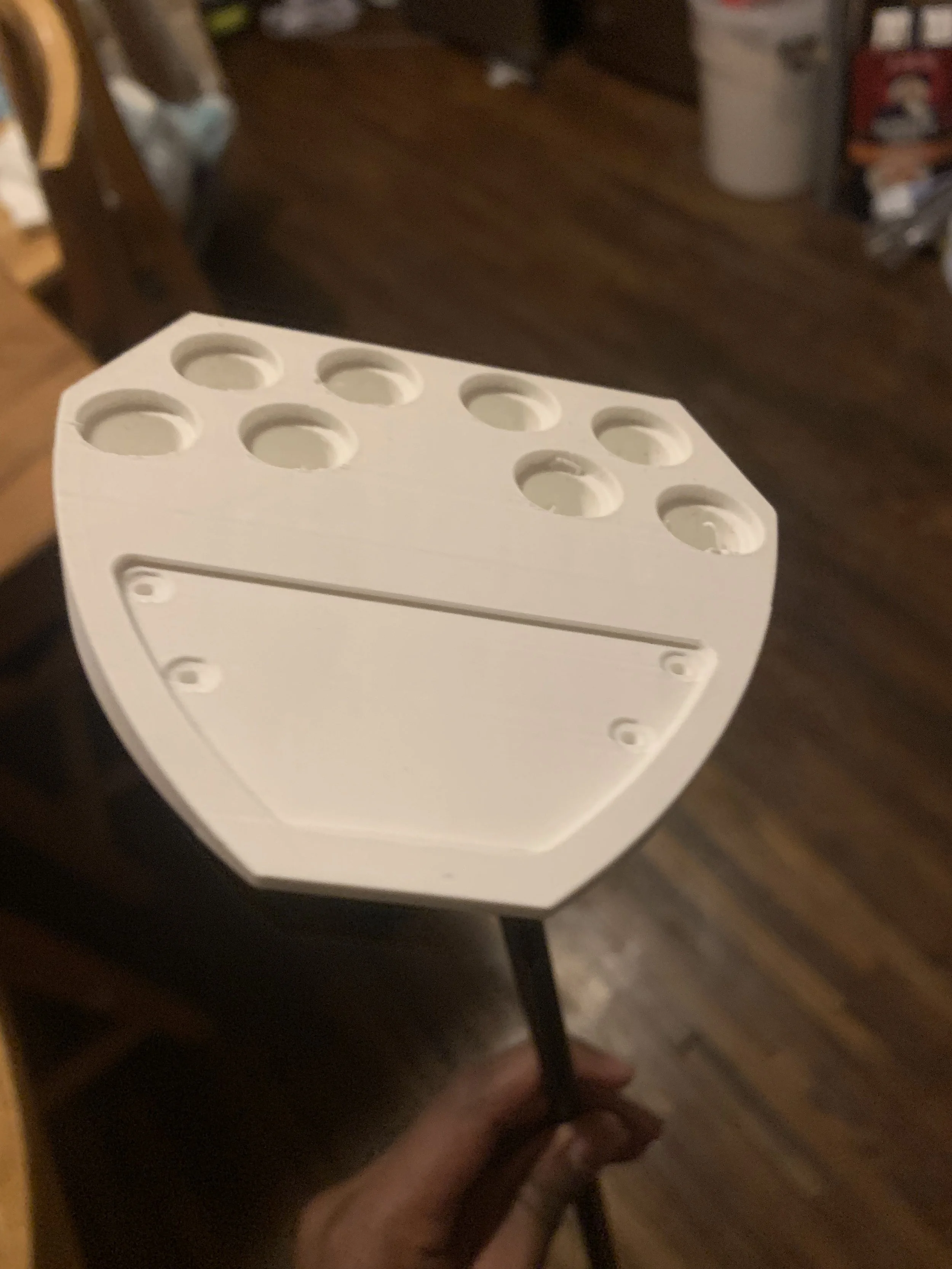
CAD: The putter was designed entirely in Onshape based on a defined set of requirements, including a center-shafted configuration, 370 g target head weight, 3° loft angle, and integrated ball-pickup functionality. A removable nameplate was also incorporated to allow for customization and personal expression.
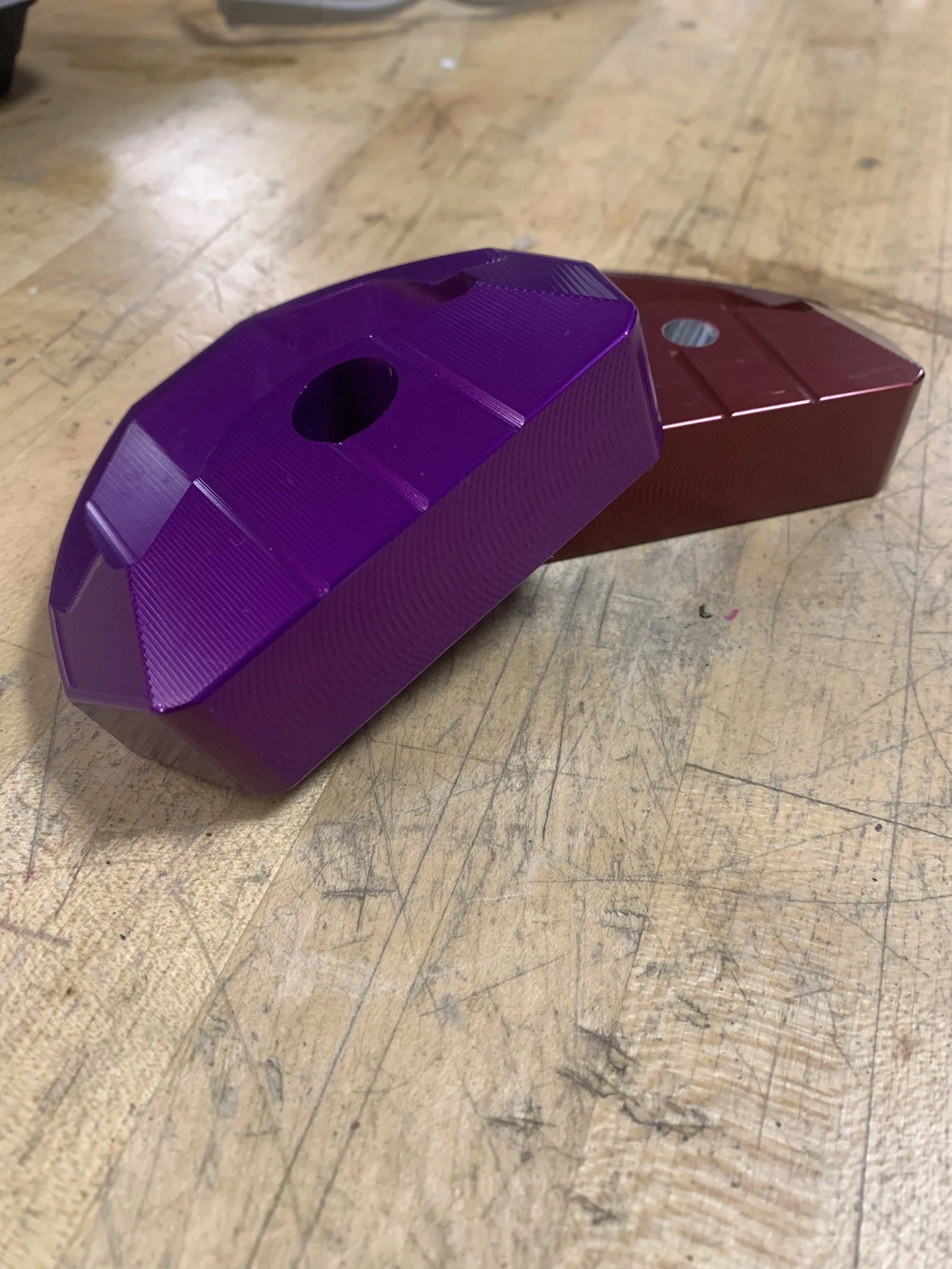
The geometry was iterated with strong consideration for manufacturability, as the part was intended for 4-axis CNC machining. This required early design decisions around tool access, feature orientation, and setup constraints. 3D-printed prototypes were used to validate ergonomics, proportions, and overall form prior to machining.
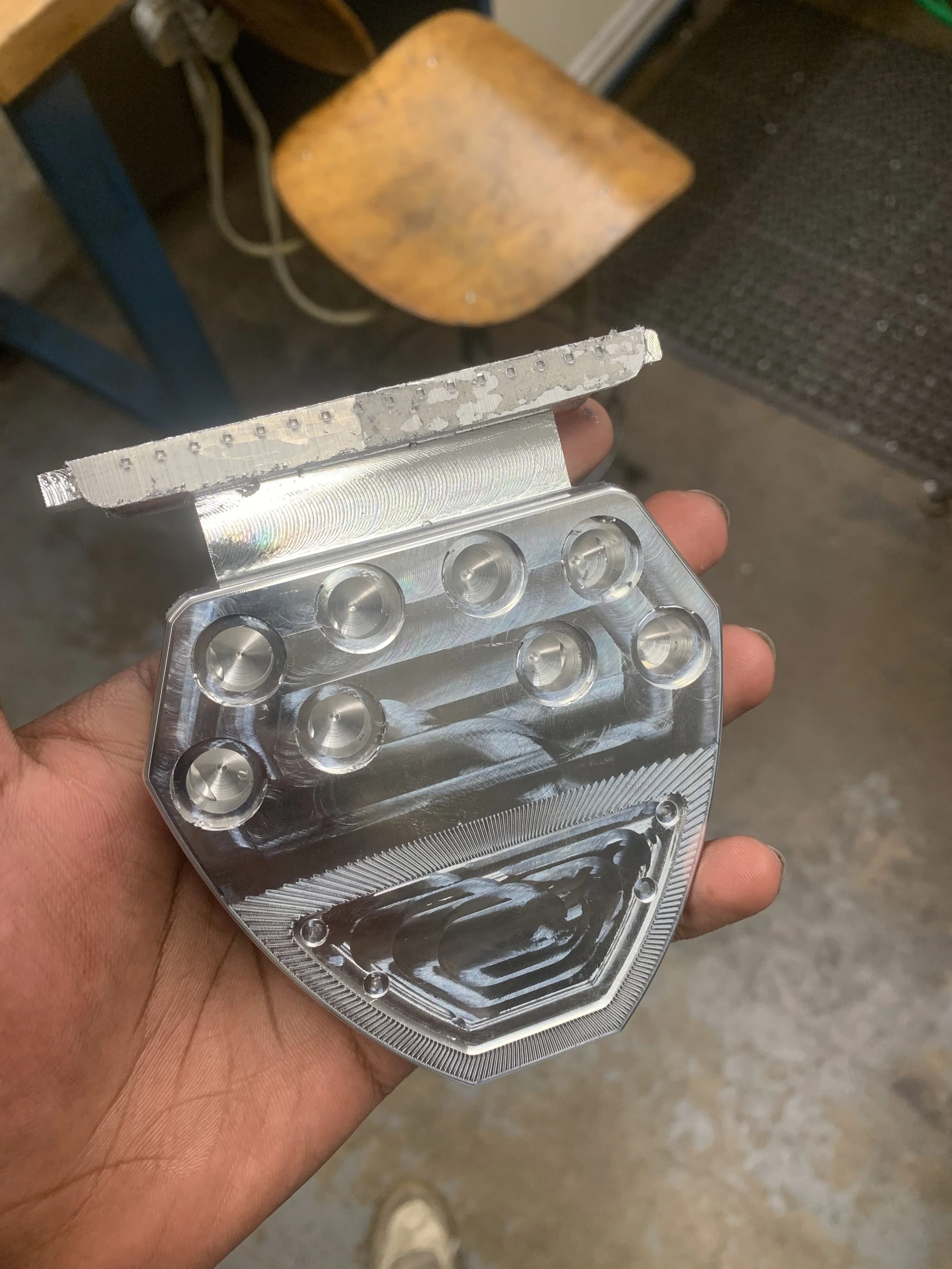
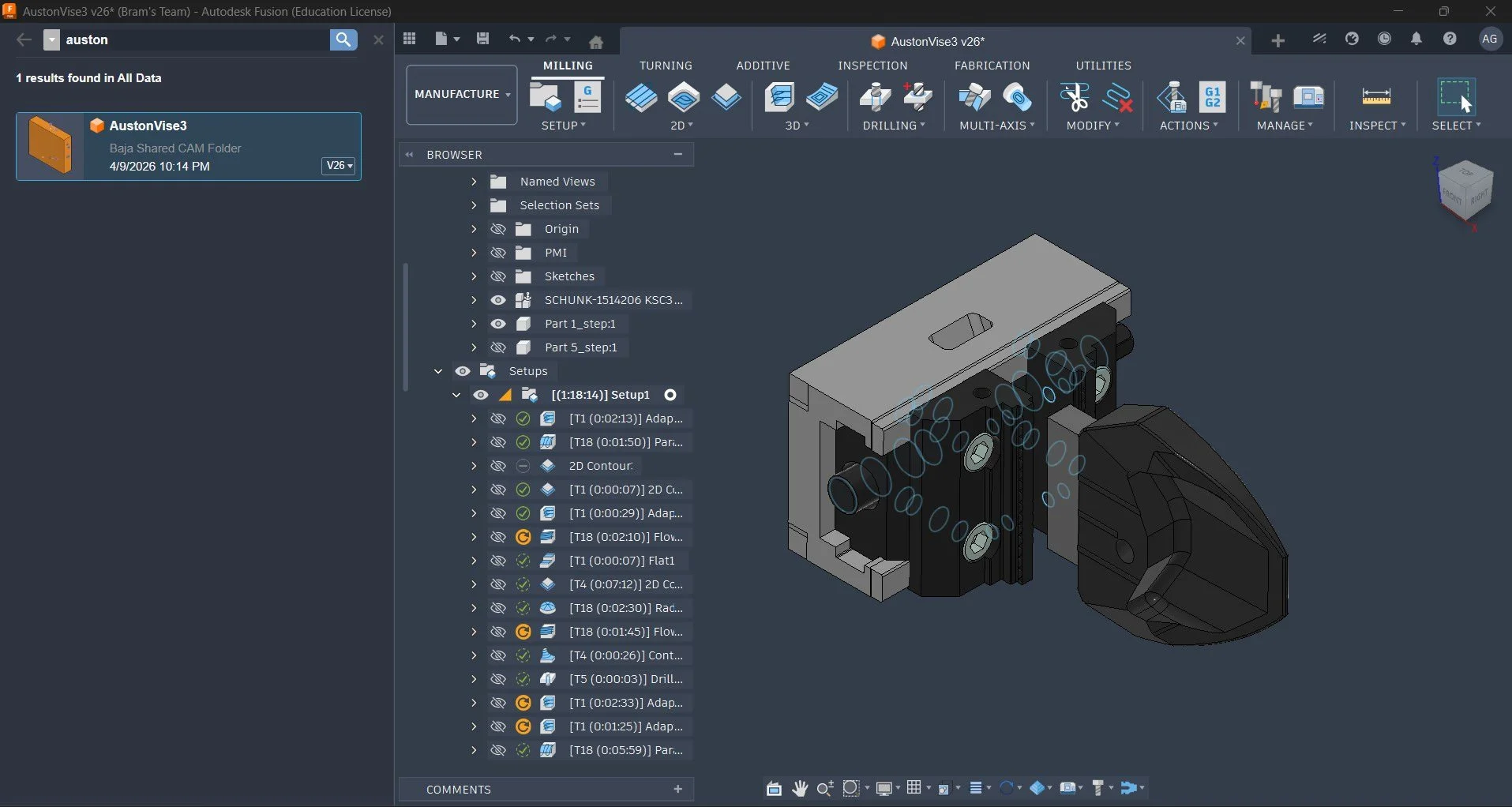
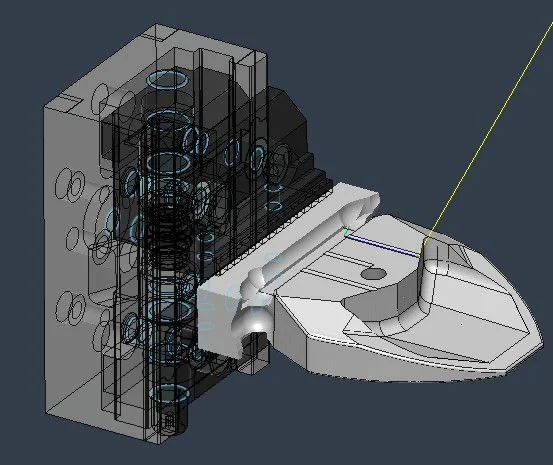
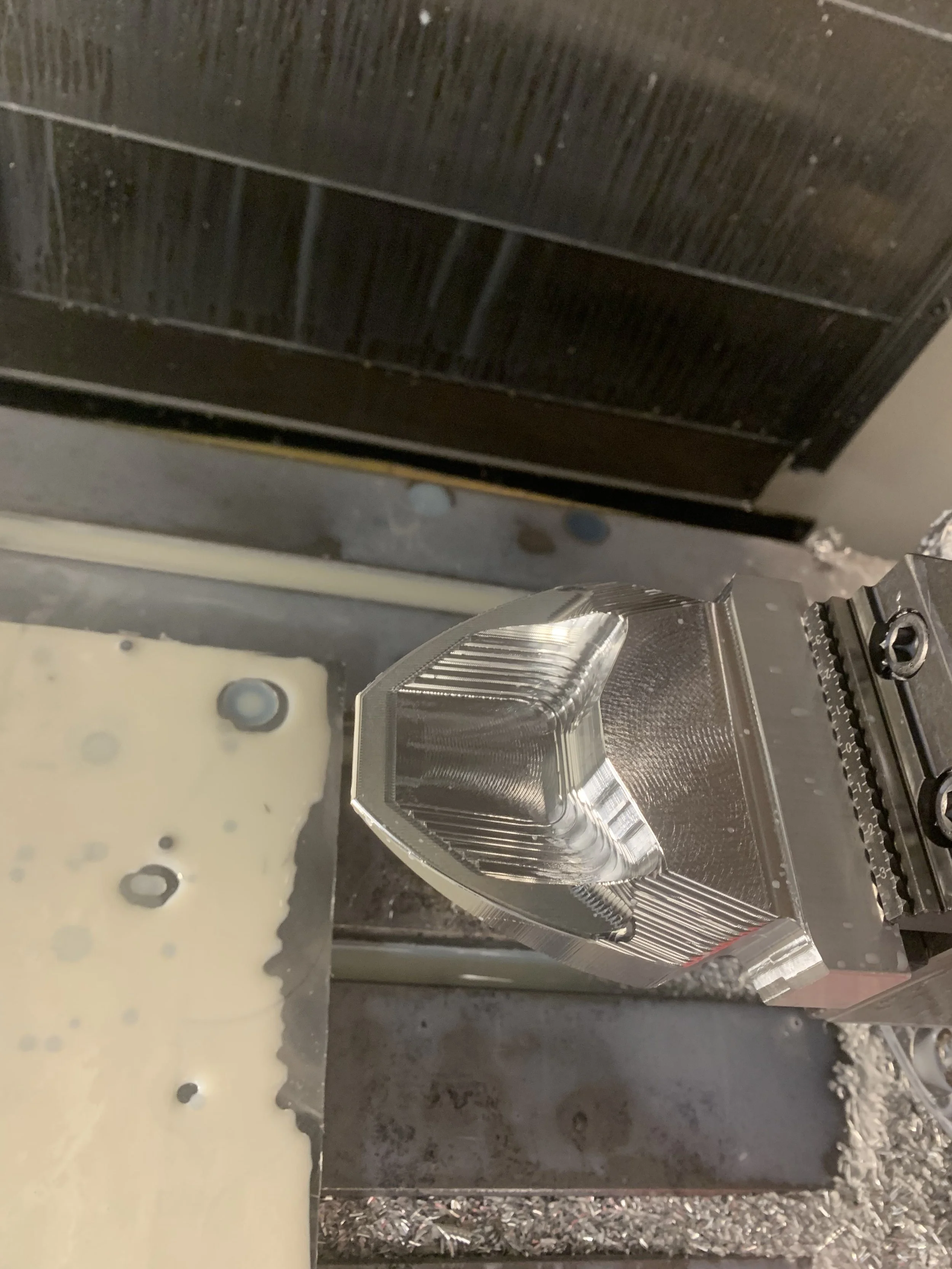
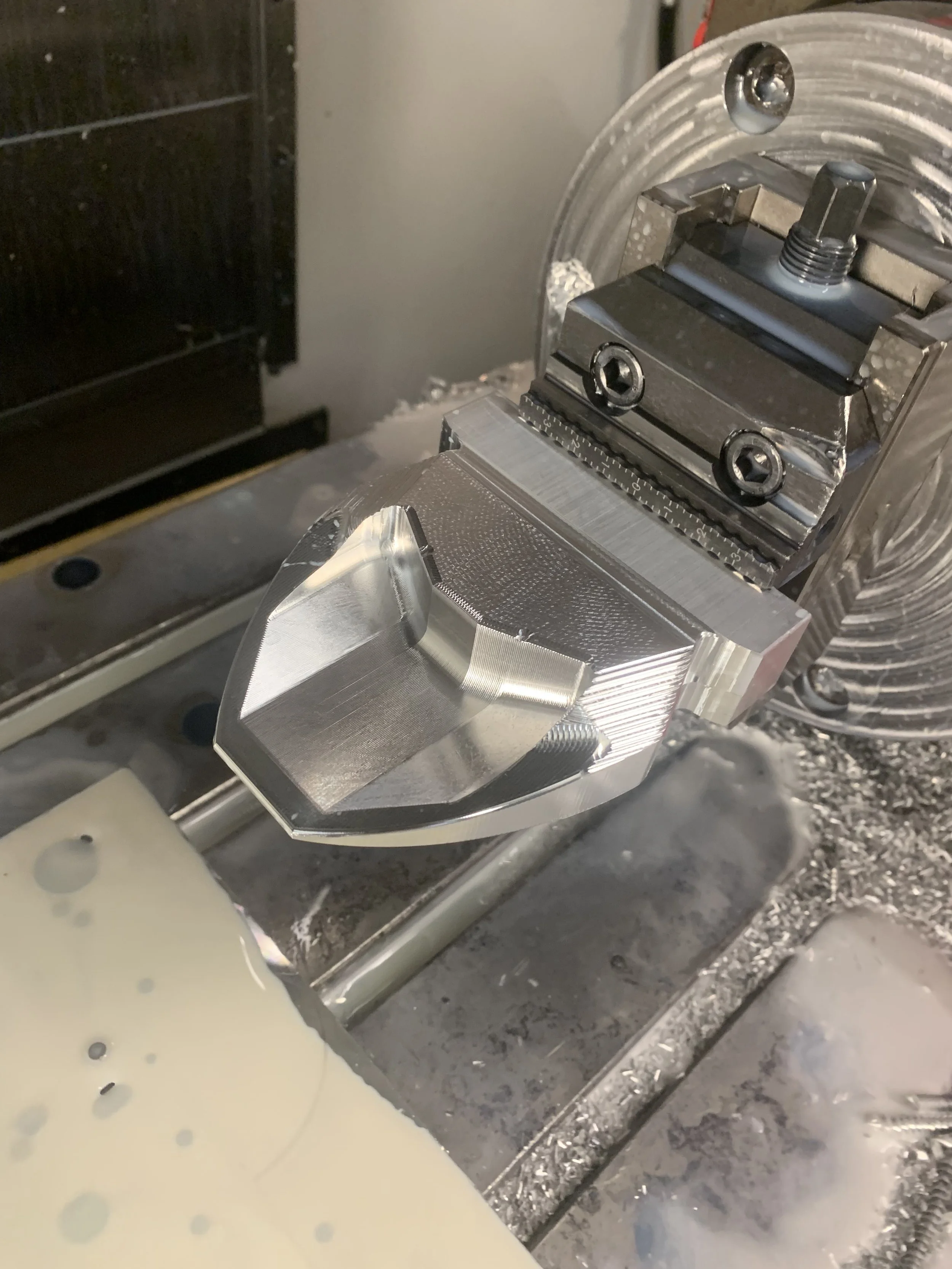
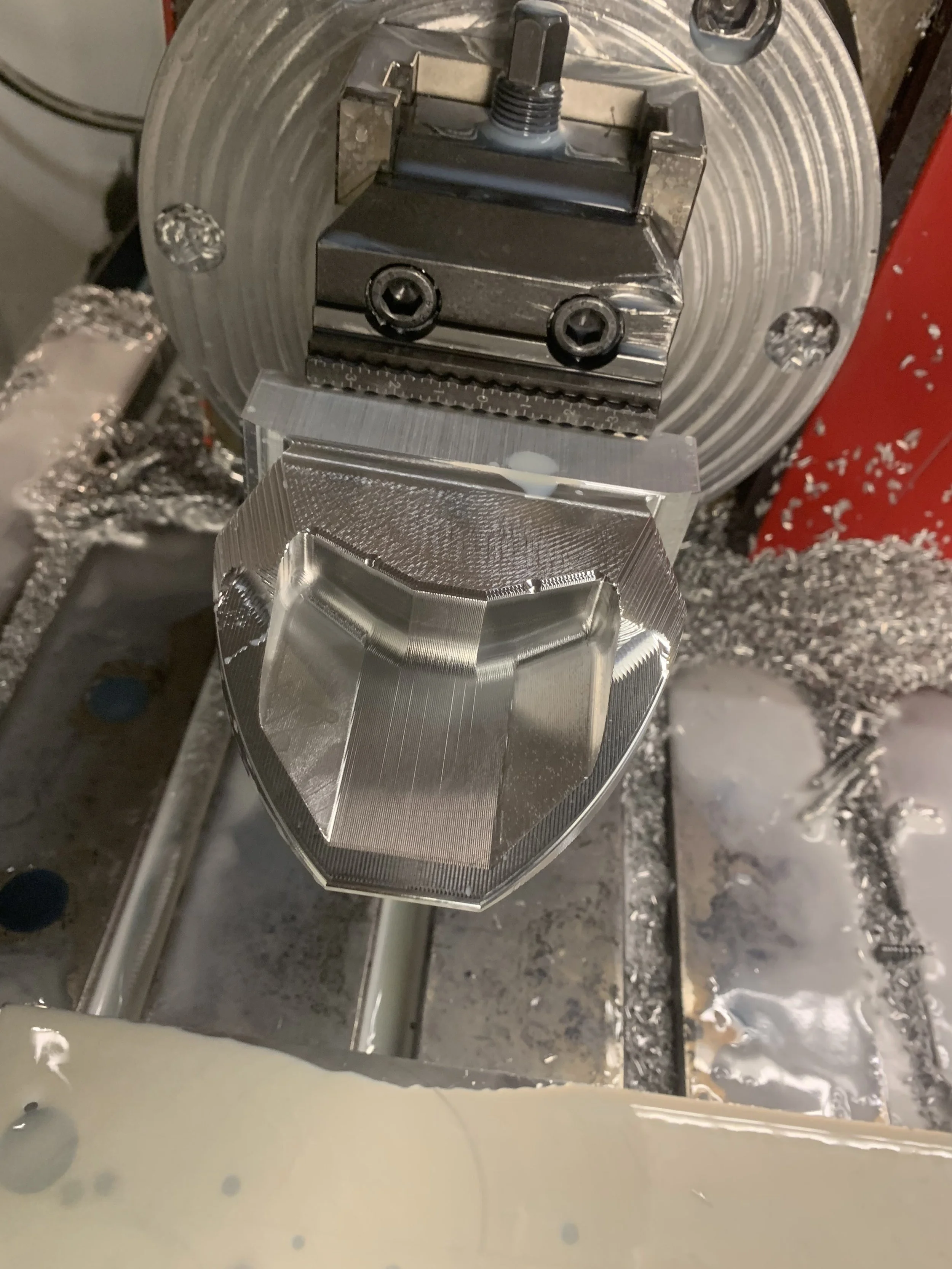
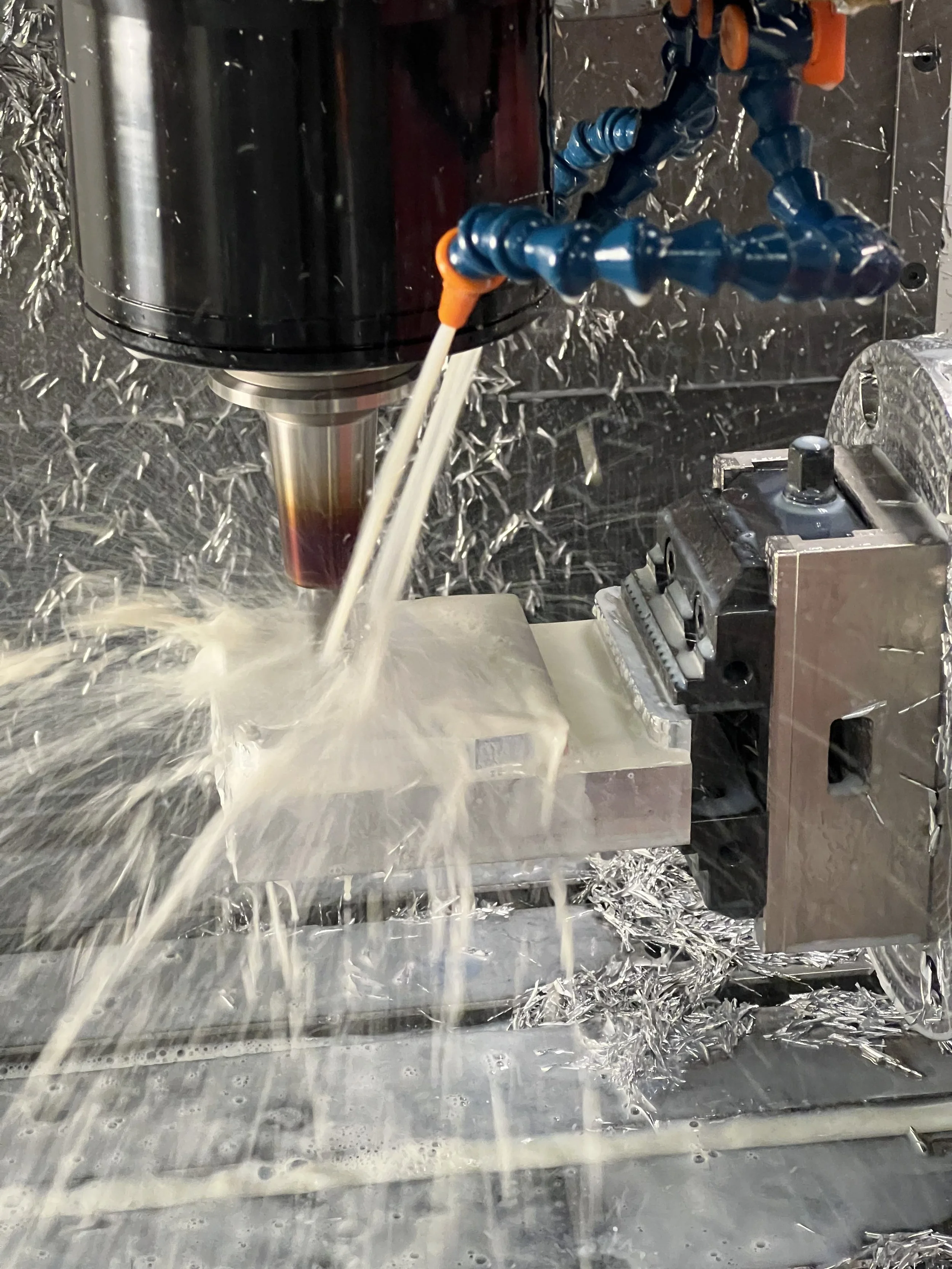
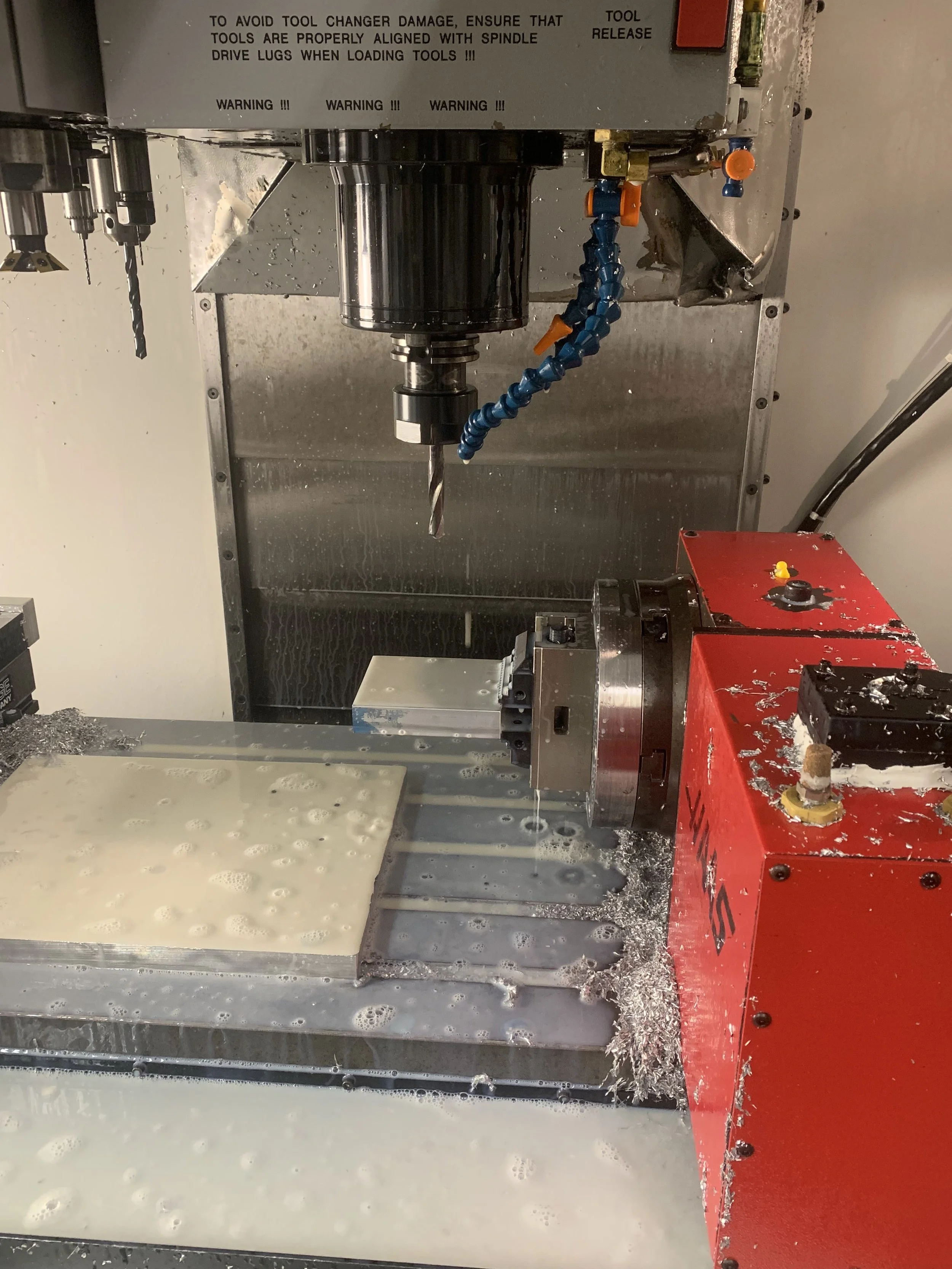
CAM Programming: Was completed in Fusion 360 using indexed 4-axis toolpaths. Compared to traditional 3-axis machining, this introduced additional complexity in setup planning, fixture design, and machining sequence. Toolpaths were developed to maintain alignment across indexed operations while balancing surface finish quality, machining time, and tool loading.
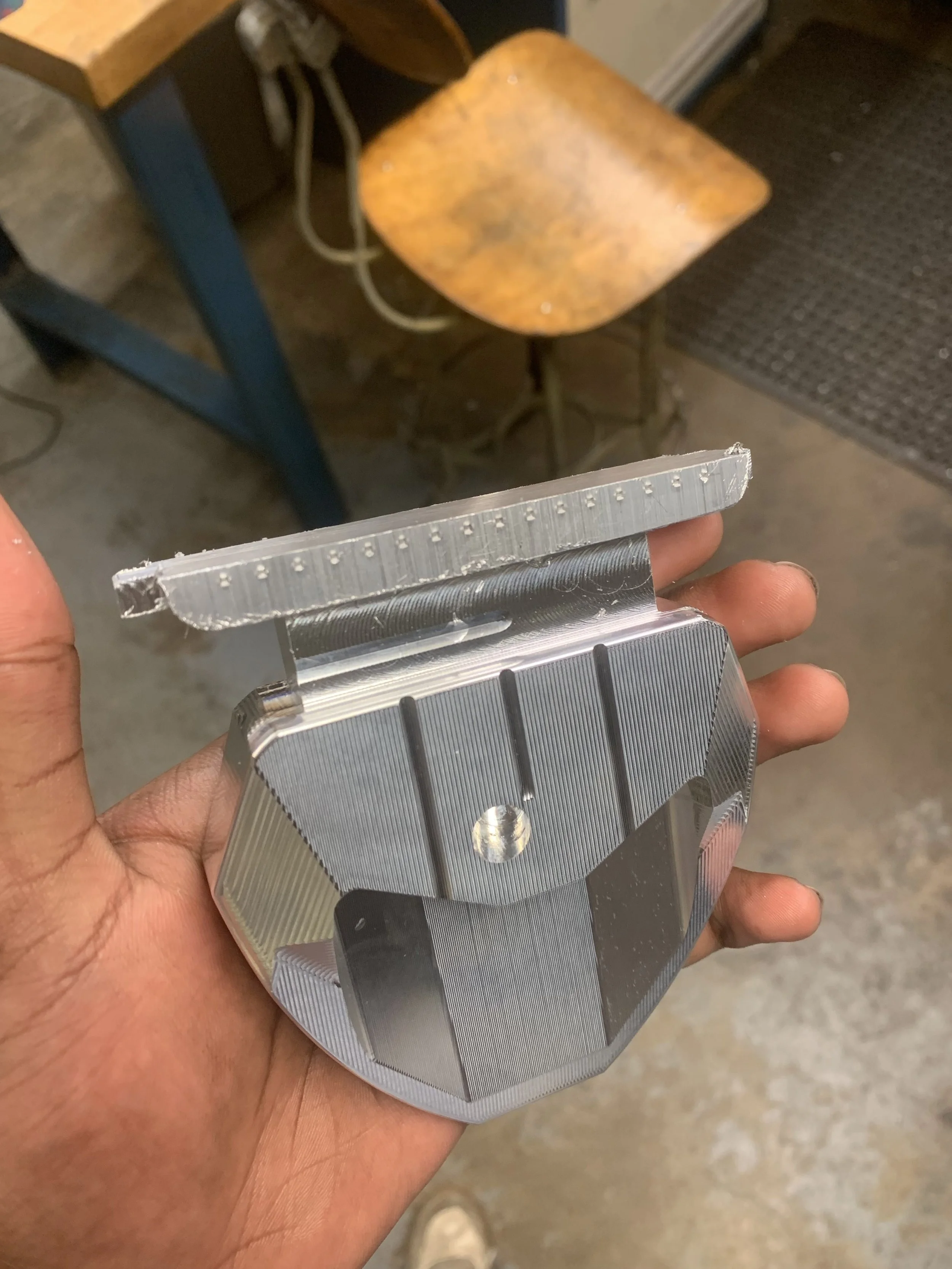
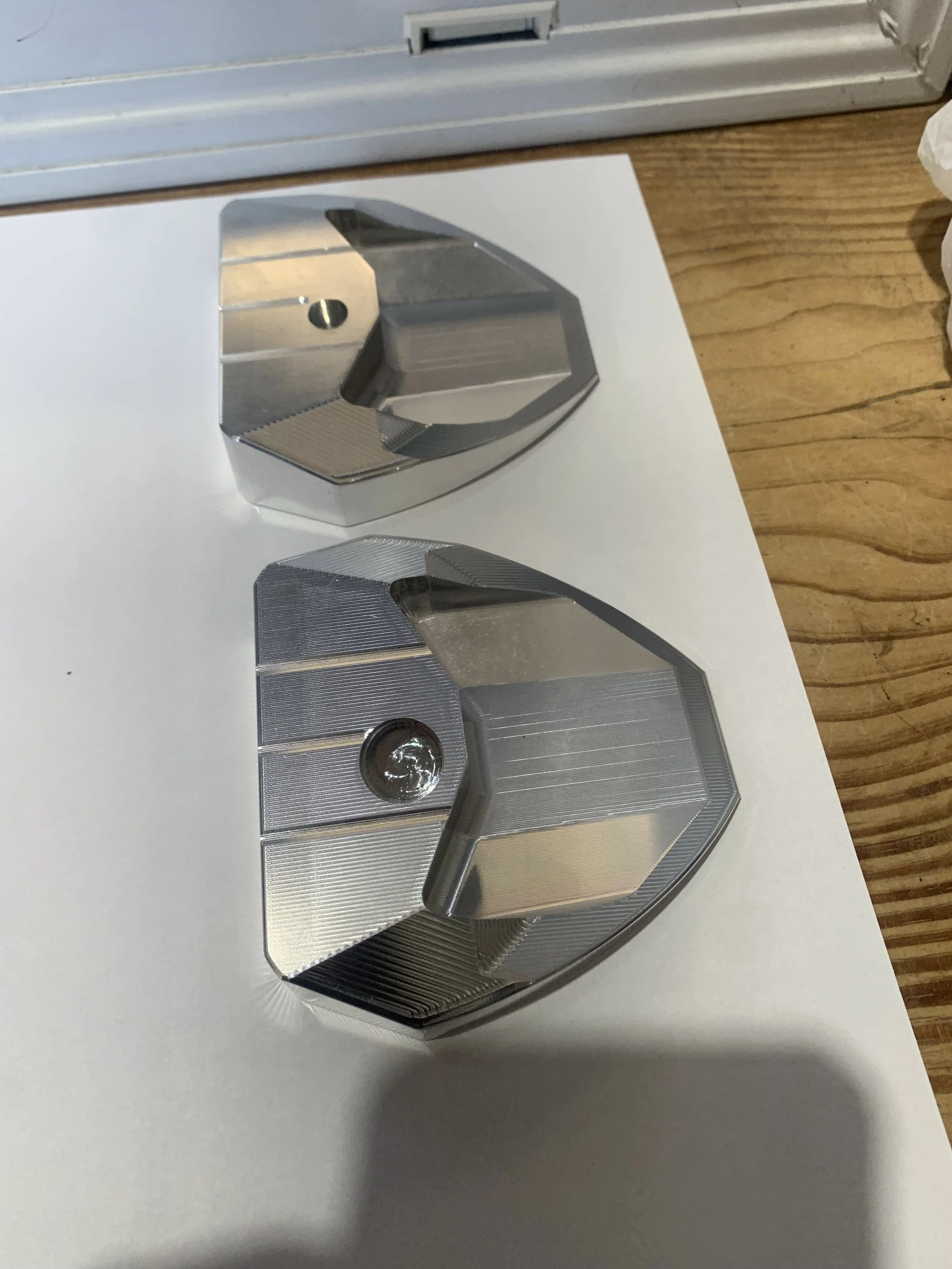
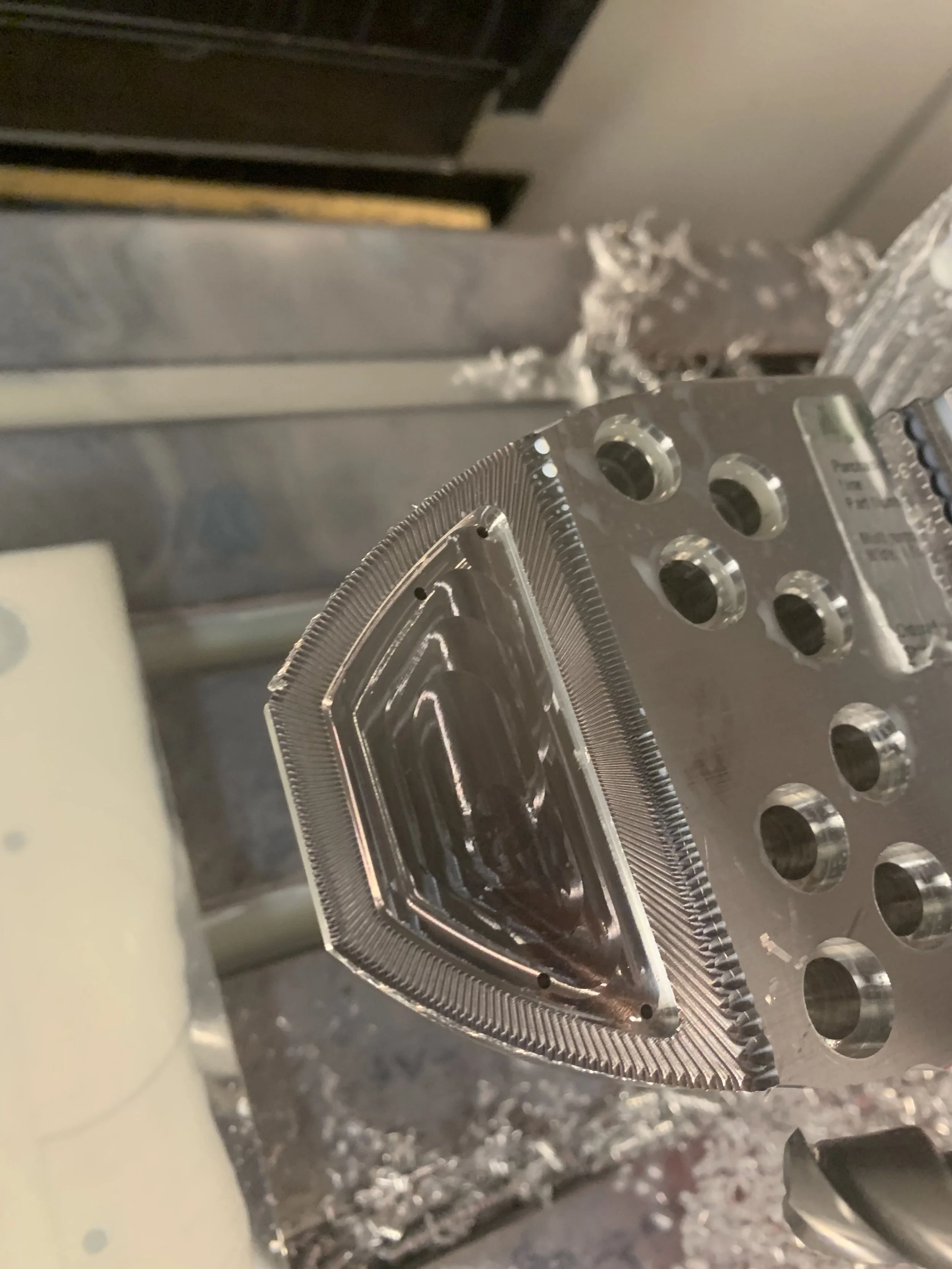
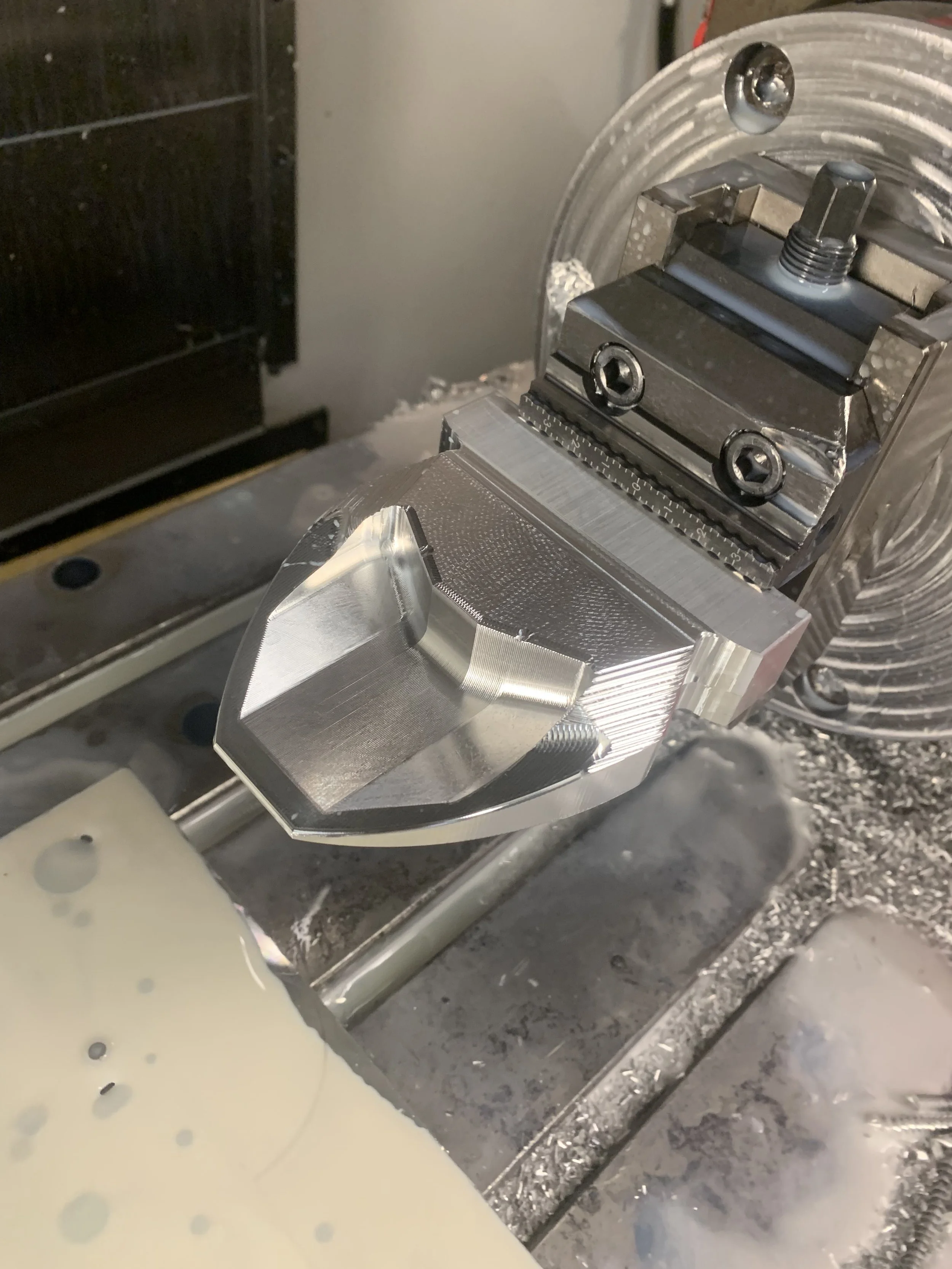
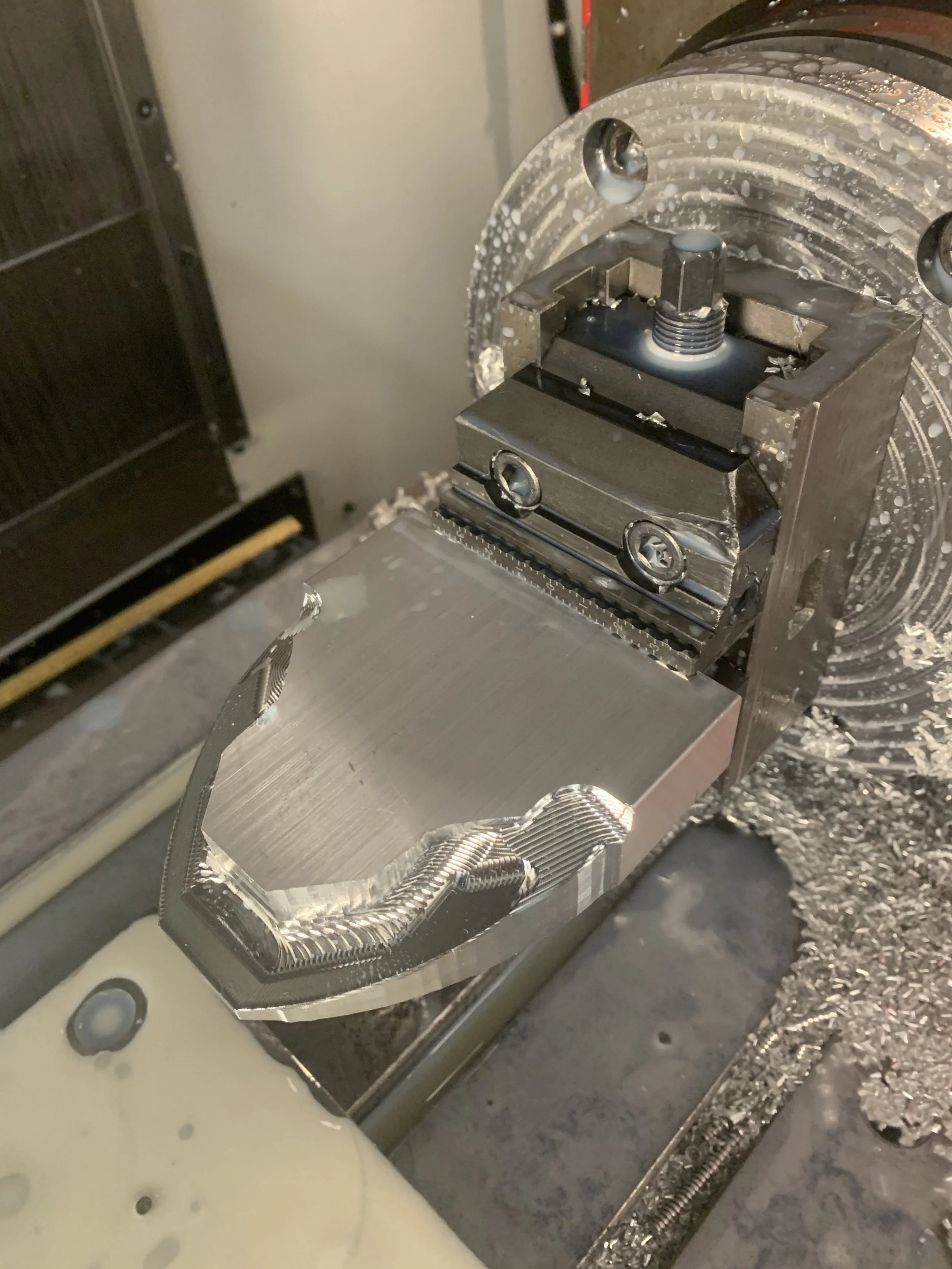
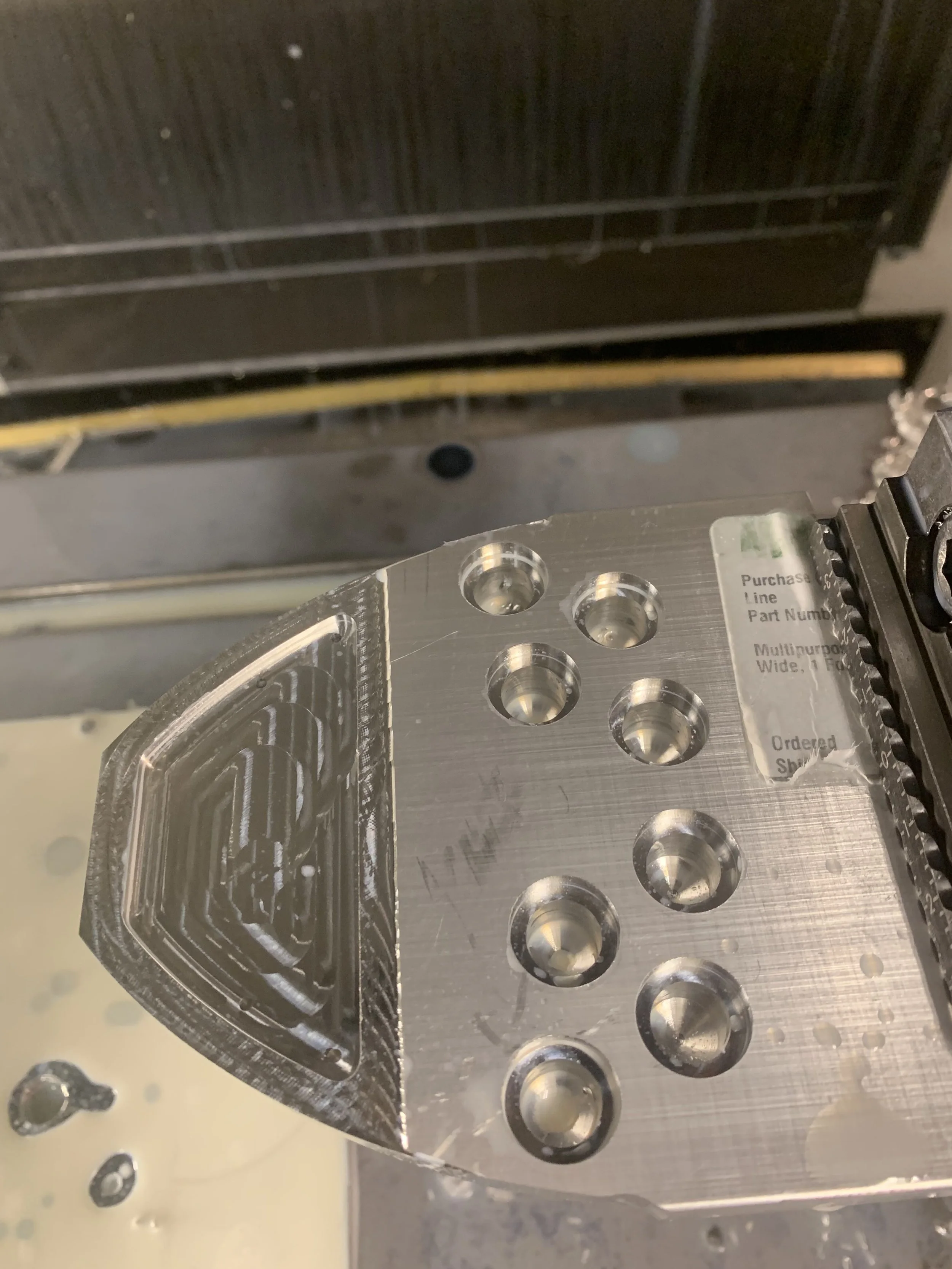
Manufacturing: The putter head was machined from 6061 aluminum using multi-operation CNC milling. Threaded weights were integrated into the sole to achieve the target mass while maintaining design intent. Workholding strategy and machining order were critical due to the multi-face nature of the part and the transition between 4-axis indexed setups.
Finishing and Assembly: After machining, the part was Type II anodized to improve durability and surface finish. Final assembly included installation of weighting components and shafting, resulting in a fully functional custom putter.